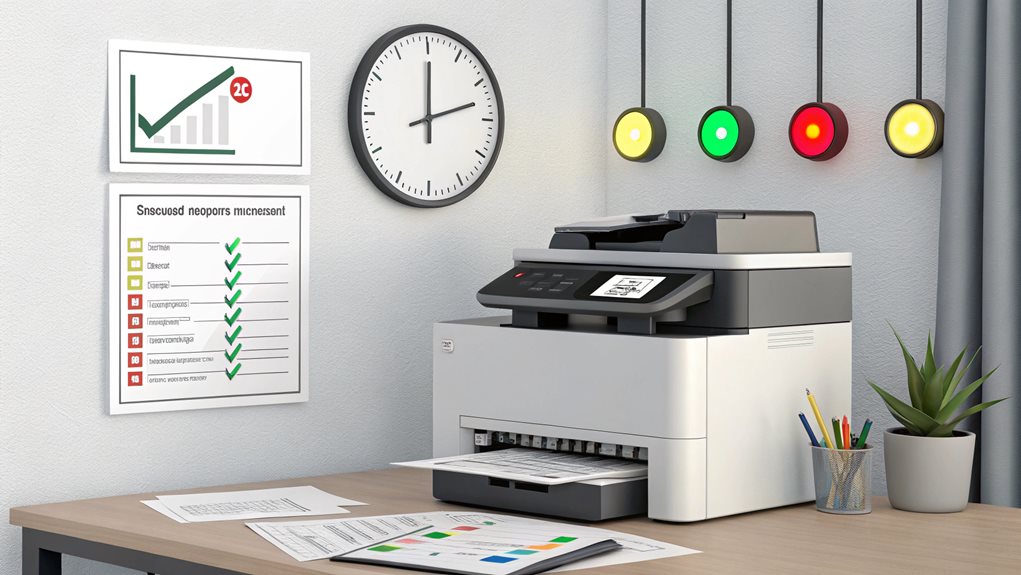
Essential Checklist for Evaluating Copier Rental Programs

Overpaying for copier rentals? Discover the essential checklist that reveals hidden costs and maximizes your equipment value.

You’re likely overpaying for copier rentals without a systematic evaluation strategy. Start by tracking your actual monthly printing volume across departments to right-size equipment and avert unused capacity. Then examine equipment specifications, compare transparent pricing models with clearly defined per-page costs and maintenance fees, and authenticate service-level agreements including response times and backup equipment provisions. Finally, scrutinize contract flexibility for early termination options and upgrade provisions. This checklist prevents costly mistakes and guarantees you’re getting genuine value for your investment.

Expert Highlights

  • Track monthly copy volume across departments to right-size equipment and avoid paying for unused capacity.
  • Compare per-page pricing, maintenance fees, and supply costs upfront to prevent surprise charges and hidden expenses.
  • Verify guaranteed response times, backup equipment provisions, and 24/7 emergency support in service level agreements.
  • Review early termination clauses, upgrade flexibility, and usage allowances to ensure contract adaptability without penalties.
  • Evaluate energy efficiency ratings and prioritize features directly tied to productivity rather than unnecessary upgrades.

Assess Your Organization’s Copy Volume and Printing Needs

assess track conserve optimize

Before you commit to a copier rental program, you’ll want to dig into exactly how much copying and printing your organization actually does, since this information becomes the foundation for every decision that follows. Track your monthly volume across departments to identify usage patterns and peak periods.

This data helps you right-size equipment and avoid overpaying for unused capacity. Consider implementing paper conservation initiatives and sustainable printing practices simultaneously, which reduce both costs and environmental impact.

Understanding your baseline needs prevents expensive rental agreements that don’t match reality, ensuring you’re investing wisely in solutions that actually serve your organization’s operations.

Evaluate Equipment Features and Technology Specifications

Once you’ve determined your organization’s copy volume, the next critical step is identifying which equipment features and technology specifications will actually support your daily operations without forcing you to pay for capabilities you’ll never use. Review energy efficiency ratings to reduce utility costs and environmental impact.

Assess equipment customization options that match your workflow—whether you need finishing features, advanced scanning, or cloud integration. Don’t get seduced by fancy functions gathering dust. Instead, prioritize features directly tied to productivity.

Match specifications precisely to operational requirements, avoiding unnecessary upgrades that drain budgets without delivering measurable returns.

Compare Pricing Models and Cost Transparency

transparent fixed rate predictable itemized billing

How do you actually know what you’re paying for when copier rental agreements come loaded with confusing fee structures, hidden charges, and pricing models that seem deliberately designed to obscure the true cost?

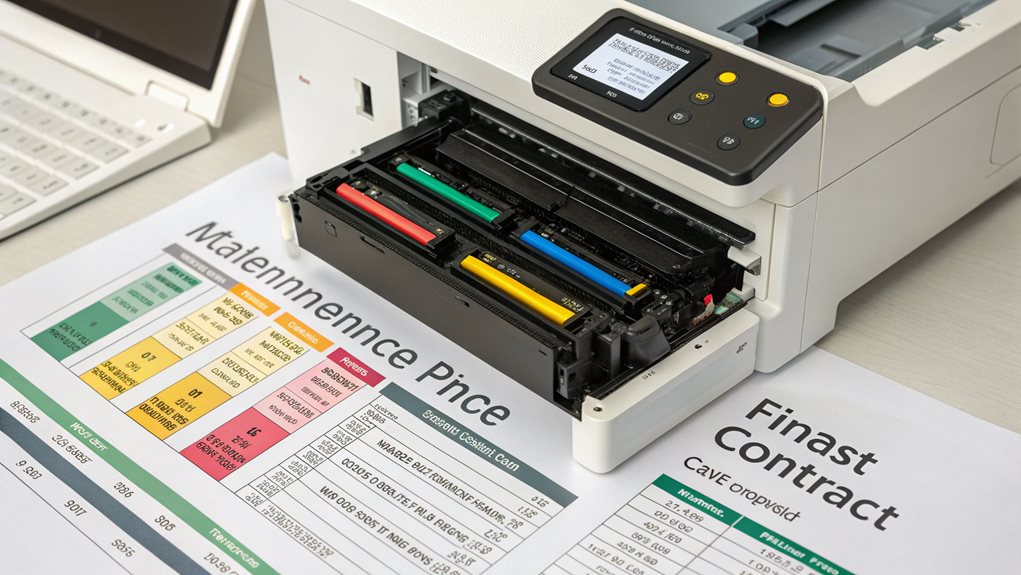
You need billing transparency and cost predictability to avoid budget surprises. Demand itemized breakdowns showing per-page costs, maintenance fees, and supply charges upfront. Request fixed-rate contracts that lock in prices for your rental term.

Demand itemized billing breakdowns upfront. Lock in fixed-rate contracts to avoid budget surprises and hidden charges.

  • Per-page pricing clearly outlined in writing
  • Monthly maintenance fees specified separately
  • Supply replacement costs defined beforehand
  • No surprise overage charges allowed
  • Annual rate increase caps disclosed


Compare vendors’ total cost of ownership, not just base rental rates, ensuring you’re getting genuine financial clarity.

Review Maintenance and Support Service Levels

When you’re evaluating copier rental agreements, you’ll want to examine the response time guarantees that vendors offer, since a machine down for hours or days can seriously disrupt your workflow and cost you productivity.

Preventive maintenance coverage—which includes regular servicing, parts replacement, and inspections before problems occur—protects you from unexpected breakdowns and helps extend your equipment’s lifespan, ultimately saving you money on emergency repairs.

Response Time Guarantees

Why does it matter how quickly your copier rental company responds when equipment breaks down?

When your copier goes down, every minute costs productivity and money. You’ll want response time guarantees spelled out in your service level agreements, ensuring your vendor commits to specific timeframes like same-day or four-hour service. Response time monitoring holds companies accountable.

Consider these critical factors:

  • Guaranteed response windows matching your business hours
  • Escalation procedures if initial attempts fail
  • Backup equipment provided during repairs
  • 24/7 availability for emergency situations
  • Performance penalties if standards aren’t met

Demanding clear response commitments prevents frustrating delays and keeps your operations running smoothly.

Preventive Maintenance Coverage

Regular maintenance keeps your copier running reliably and prevents costly breakdowns that disrupt your workflow, so you’ll want to confirm that your rental agreement includes detailed preventive maintenance coverage with clearly defined service levels.

Ask your provider about preventive maintenance scheduling—specifically, how often technicians inspect your machine and replace worn parts before failure occurs. Understanding preventive maintenance best practices means knowing whether your agreement covers toner replenishment, drum cleaning, and component replacements.

Request a maintenance log showing documented service visits, response times for urgent repairs, and what happens if equipment fails between scheduled appointments. This transparency guarantees you’re protected from unexpected downtime and repair costs.

Examine Contract Terms and Flexibility Options

contractual terms flexibility termination usage allowances

Before you commit to a copier rental agreement, you’ll want to scrutinize the contract’s terms and flexibility options because they’ll determine how much control you actually have over your equipment and costs down the road. Your contract duration and service agreement customization directly impact your budget flexibility and operational freedom.

Early termination clauses protect you if business needs change unexpectedly. Upgrade flexibility lets you swap equipment without penalty fees. Service response times guarantee minimal downtime during critical projects. Usage allowances prevent surprise overage charges that drain budgets. Customizable maintenance tiers match coverage to your actual demands.

Verify Vendor Reliability and Customer References

Once you’ve locked down favorable contract terms, you’ll want to verify that the vendor behind those promises can actually deliver on them, because a contract’s only as good as the company backing it up. Check vendor longevity by researching how long they’ve operated and their industry reputation.

Assess financial stability through credit reports and client testimonials. Request references from current customers and contact them directly about equipment reliability, service response times, and problem resolution. Verify insurance coverage and certification credentials. A vendor with strong financials and satisfied customers guarantees you won’t be stranded with broken equipment or disappearing support when issues arise.

Frequently Asked Questions

What Environmental Certifications or Sustainability Practices Does the Copier Vendor Maintain?

You’ll want to ask vendors about their recycling policies and energy efficiency ratings—basically, you’re checking if they’re actually “green” or just greenwashing their way through sustainability claims.

Can We Upgrade or Downgrade Equipment Mid-Contract if Business Needs Change Unexpectedly?

You’ll find most vendors offer flexibility in contract terms, letting you upgrade or downgrade with customizable usage plans. Sure, they’ll charge you a fee for the privilege of changing your mind—because nothing’s truly free in the copier world.

How Quickly Does the Vendor Respond to Urgent Equipment Breakdowns or Emergencies?

You’ll want vendors with concrete service level commitments—ideally same-day response times. Don’t settle for “we’ll try”; demand on-site technician availability. Nothing’s worse than a broken copier and a vendor who’s basically ghosting you.

Are There Hidden Fees for Exceeding Monthly Page Limits or Special Features?

You’ll want to scrutinize those contracts carefully—hidden fees lurk like paper jams. Ask about toner replacement costs and maintenance schedules upfront. Don’t let surprise charges copy their way into your budget.

What Data Security Measures Protect Sensitive Documents Printed on Rental Copiers?

You’ll want vendors using data encryption protocols to scramble your secrets like a digital scrambled egg. Demand secure document disposal so your confidential stuff doesn’t become office gossip or recycling bin gold.

Expert Final Thoughts

You’ve now got the essential tools to make a smart copier rental decision. By thoroughly examining your volume needs, comparing equipment features, analyzing pricing transparency, checking maintenance support, scrutinizing contract terms, and verifying vendor credibility, you’ll safeguard a rental arrangement that genuinely fits your organization’s requirements while shielding your budget. Don’t rush this evaluation—taking time upfront prevents costly mistakes and guarantees you’re getting real value.
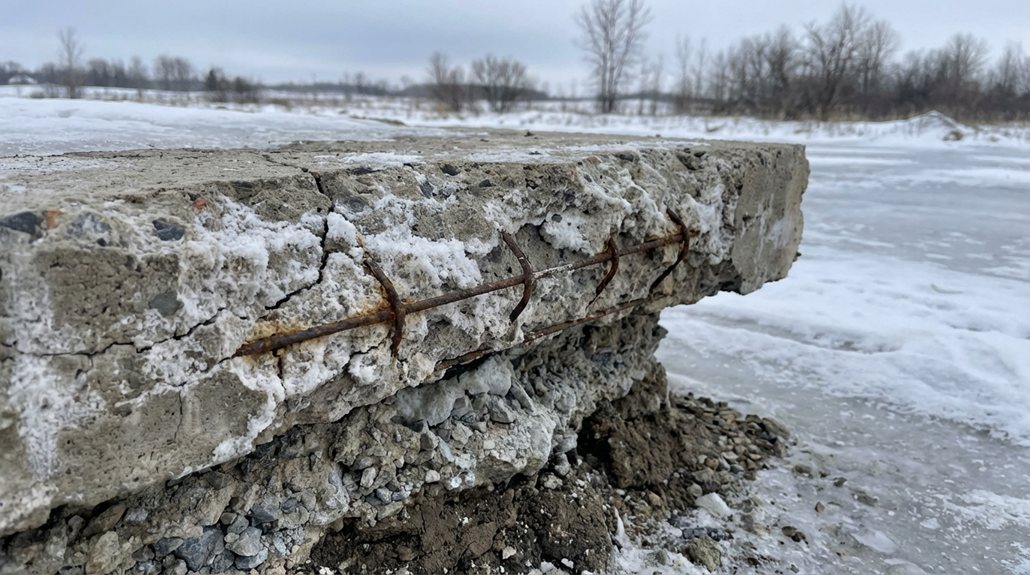
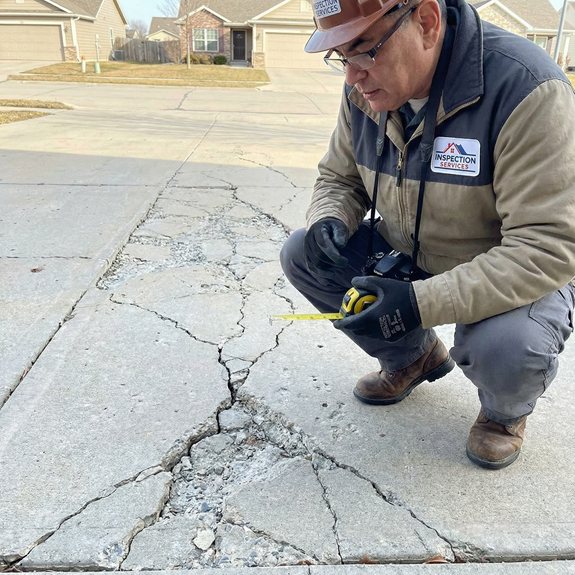
How to Build Durable Concrete Driveways for Harsh Climates

Avoiding costly driveway failures in extreme weather requires understanding air-entrained concrete and specialized installation techniques—but what’s the critical element most homeowners miss?

Building a durable concrete driveway in harsh climates means fighting freeze-thaw cycles, extreme heat, and moisture damage. You’ll need air-entrained concrete with 4–8% air content to prevent spalling and cracking. Install a 4–6 inch thick slab with reinforcement, proper grading for drainage, and a crushed stone base. Select cement types resistant to chemical attacks, add silica fume or fly ash for strength, and apply protective sealers. The upfront investment in high-performance materials and installation techniques pays dividends through decades of reliable service, and understanding each component’s specific role transforms your driveway into a fortress against nature’s assault.

Expert Highlights

  • Use high-performance concrete mixes with air entrainment (4-8% air content) to prevent freeze-thaw damage in cold climates.
  • Install a minimum 6-inch thick concrete slab with rebar reinforcement to withstand extreme temperature fluctuations and stress.
  • Incorporate additives like silica fume, fly ash, and water reducers to create defensive layers against chemical attacks.
  • Ensure proper site preparation with compacted soil, 2% grading for drainage, and a crushed stone base layer.
  • Design effective drainage systems to manage moisture and prevent water infiltration that accelerates concrete deterioration in harsh conditions.

Understanding Climate-Specific Concrete Challenges

climate specific concrete challenges

Your concrete driveway faces a constant battle against weather, and where you live determines which enemies it’ll fight hardest. In freezing climates, water seeps into tiny cracks, freezes, and expands—creating a destructive cycle called freeze-thaw damage.

Hot, dry regions cause rapid evaporation during the concrete curing process, leading to weak surfaces and premature cracking. Your concrete mix design must account for these conditions; professionals adjust water content, air entrainment, and cement ratios accordingly.

Understanding your climate’s specific stressors—whether salt exposure, UV intensity, or moisture levels—lets you select appropriate materials and techniques that prevent costly repairs later.

Selecting High-Performance Concrete Mixes for Extreme Conditions

When you’re building a durable driveway in harsh climates—whether that’s freeze-thaw cycles in northern regions or intense heat in the desert—you’ll need to make strategic choices about your concrete mix to prevent cracking, scaling, and deterioration. Air entrainment, which introduces tiny air bubbles throughout the concrete, gives you a built-in cushion that allows water to expand safely during freezing without damaging the structure.

Selecting the right cement type (such as low-alkali or sulfate-resistant formulas) protects against chemical attacks from road salt and soil minerals. By combining these high-performance elements upfront, you’ll invest slightly more initially but sidestep costly repairs and premature replacement down the road.

Air Entrainment Benefits

How does concrete survive freeze-thaw cycles that’d crack ordinary driveways in just a few winters? Air entrainment is your answer—tiny intentional air bubbles trapped throughout the concrete mix that provide escape routes for expanding ice.

Your driveway gains these air entrainment advantages:

  • Absorbs pressure from frozen water expansion
  • Prevents destructive ice lens formation
  • Reduces salt damage penetration
  • Extends lifespan 20+ years
  • Maintains structural integrity during temperature swings

Air entrainment performance fundamentally gives your concrete breathing room, literally. These microscopic pockets act as safety valves, allowing ice crystals to expand harmlessly instead of shattering the surface. You’re investing in longevity and reliability.

Cement Type Selection

Different cement compositions deliver vastly different performance levels when concrete faces extreme freeze-thaw cycles, salt exposure, and temperature swings—yet many homeowners simply accept whatever mix their contractor recommends without understanding the critical difference between standard Portland cement and high-performance alternatives.

You’ll want Type II or Type V Portland cement for harsh climates because they’re specifically engineered with superior cement strength properties that resist salt damage. Your concrete mixture design should incorporate supplementary materials like fly ash or slag, which densify the concrete and reduce water penetration. This targeted approach prevents costly deterioration, extending your driveway’s lifespan considerably while protecting your investment from environmental assault.

Essential Air Entrainment and Additives for Freeze-Thaw Protection

air entrainment and protective additives

When you expose concrete driveways to freeze-thaw cycles—where water seeps into pores, freezes, expands, and cracks the surface—you need air entrainment (tiny intentional air bubbles) to provide escape routes for this expanding ice, which directly prevents structural damage and extends your driveway’s lifespan by decades.

You’ll also want to select protective additives like air-entraining agents, silica fume, and water reducers that work together: the bubbles absorb pressure, the silica fume densifies the concrete matrix to block water infiltration, and the water reducers lower permeability, creating multiple defensive layers against the harsh seasonal conditions that typically destroy untreated driveways within 5-10 years.

Air Entrainment Fundamentals

Your concrete driveway faces a relentless enemy during winter: freeze-thaw cycles that’ll crack and crumble your investment if you’re not prepared. Air entrainment fundamentals protect your concrete by deliberately creating tiny air pockets throughout the concrete matrix interaction, allowing water to expand safely without destroying your surface.

Proper entrainment requires 4-8% air content in your mix. Air pocket formation happens during mixing with specialized admixtures. Concrete matrix interaction strengthens when air bubbles are evenly distributed. Under-entrainment leaves your driveway vulnerable to spalling and cracking.

Air pockets act as escape routes for expanding ice crystals. This simple strategy transforms ordinary concrete into winter-resistant protection.

Protective Additives Selection

How do you know which additives will truly protect your concrete beyond just air entrainment alone? You’ll need to master admixture selection and admixture compatibility to prevent freeze-thaw damage.

Different additives—like silica fume, fly ash, and water reducers—work together strategically, but mixing incompatible products causes problems: reduced strength, surface scaling, and premature failure. Your concrete contractor must verify that each admixture bonds properly with others before application.

When you choose complementary additives that enhance air entrainment performance, your driveway resists salt damage and temperature swings effectively for decades.

Proper Site Preparation and Drainage Solutions

Before you pour a single cubic yard of concrete, the ground beneath it must be properly prepared, or you’ll face expensive problems down the road—foundation settling, cracking, and premature failure that could’ve been prevented entirely.

Your preparation strategy should include:

  • Soil compaction using mechanical tampers to eliminate air pockets
  • Grading sloped at least two percent for water runoff
  • Base layer installation (4-6 inches of crushed stone)
  • Drainage systems directing moisture away from the slab
  • Frost protection in harsh climates requiring deeper bases

Proper water management prevents ice accumulation and subsurface erosion. You’re fundamentally building a fortress against nature’s harshest attacks.

Optimal Thickness and Reinforcement Specifications

thickness reinforcement integrity lifespan

Once you’ve built a solid foundation with proper site preparation, the concrete slab itself must be engineered to handle the weight and stress it’ll endure—and this comes down to two critical factors: thickness and reinforcement.

You’ll want at least four inches thick for residential driveways in harsh climates; six inches works better where freeze-thaw cycles occur regularly. Rebar or wire mesh provides stress distribution, preventing cracks from spreading catastrophically. Proper reinforcement guarantees structural integrity by absorbing tensile forces that concrete alone can’t handle.

This combination prevents costly failures and extends your driveway’s lifespan greatly, protecting your investment through decades of demanding weather.

Finishing Techniques That Enhance Durability

With your concrete slab properly reinforced and thick enough to handle the stresses of daily use, you’re ready for the finishing phase—and here’s where surface treatment becomes your defense against premature deterioration.

Your finishing choices dramatically impact durability in harsh climates:

  • Textured finishes prevent slipping while increasing abrasion resistance
  • Broom finishes create grip patterns that resist freeze-thaw damage
  • Sealing applications block water infiltration and salt penetration
  • Air entrainment incorporates tiny bubbles protecting against ice expansion
  • Proper curing allows concrete to reach maximum strength

These techniques aren’t optional upgrades—they’re essential investments that extend your driveway’s lifespan by years, preventing costly repairs from environmental stress.

Sealing and Protective Coatings for Long-Term Protection

concrete driveway moisture protection coatings

Even the most expertly installed and finished concrete driveway faces a relentless enemy: water infiltration, which seeps into microscopic pores and causes expansion, cracking, and surface spalling as freeze-thaw cycles repeat year after year.

You’ll want penetrating sealers that absorb into the concrete, blocking moisture while letting the surface breathe. Decorative coatings add protection and curb appeal simultaneously.

Apply sealers every two to three years in harsh climates where temperature swings are fundamentally dramatic. Without this defense, you’re inviting expensive repairs. Proper sealing transforms your driveway from a liability into a lasting investment.

Maintenance Strategies to Extend Driveway Lifespan

How can you protect your concrete investment after the sealant’s been applied?

Periodic maintenance keeps your driveway performing strong in harsh climates. You’ll need to:

  • Clean debris regularly to prevent moisture buildup
  • Inspect drainage systems quarterly for blockages
  • Fill cracks promptly before they expand
  • Reapply sealant every two to three years
  • Remove salt and chemicals immediately after winter

Frequently Asked Questions

How Much Does Installing a Durable Concrete Driveway Cost in Harsh Climates?

You’re looking at $8-$18 per square foot for concrete driveway installation costs in harsh climates. Yeah, it’s pricey, but you’ll laugh all the way to the bank when your driveway’s expected lifespan hits 30-40 years without cracking like your sense of humor.

How Long Should Homeowners Expect a Properly Built Driveway to Last?

You’ll get 25-30 years if you’ve nailed your driveway construction methods and aren’t lazy about maintenance requirements. Skip either, and you’re basically paying for an expensive parking lot that’ll crack faster than your willpower in January.

What Are the Warning Signs That a Driveway Needs Repair or Replacement?

You’ll spot trouble when cracking patterns emerge like your driveway’s having a breakdown. Freeze-thaw cycles leave potholes that’ll swallow your car’s dignity. If you’re playing hopscotch in your garage, it’s replacement time.

Can Existing Damaged Driveways Be Repaired Instead of Completely Replaced?

You’ve got options! Concrete resurfacing can totally save your wallet before you’re stuck replacing the whole thing. Overlay coatings and patches work great for minimizing driveway cracks, letting you dodge that expensive full replacement.

Which Climate Regions Experience the Most Severe Concrete Driveway Damage?

You’ll find your driveway’s worst enemy in northern regions where freezing temperatures and heavy snowfall team up like a concrete-destroying comedy duo. Those freeze-thaw cycles? They’re basically your pavement’s kryptonite.

Expert Final Thoughts

You’ve now got the knowledge to build a driveway that’ll withstand whatever harsh climate throws at it. By selecting the right concrete mix, preparing your site properly, reinforcing adequately, and maintaining it regularly, you’re investing in decades of durability. Your driveway won’t crack from freeze-thaw cycles or crumble under extreme conditions—it’ll stay strong and reliable for years to come.

Checklist for Professional Concrete Driveway Installation

Avoid foundation failure and costly repairs by following seven critical concrete installation phases—discover why one missed step ruins everything.

You’ll prevent costly repairs by systematically addressing seven critical phases. Start with site assessment to evaluate soil and drainage, then establish proper grading with slopes directing water away from your foundation. Prepare your base through compaction to 95% soil density, select concrete with adequate strength (3,500-4,000 PSI), install formwork precisely, pour and cure properly for seven days minimum, and schedule inspections every six months with sealant applications every 2-3 years. The details behind each checkpoint reveal why skipping steps leads to expensive rework.

Expert Highlights

  • Evaluate soil conditions, drainage patterns, and site accessibility before beginning any concrete driveway installation work.
  • Establish proper grading with 1-2% slope and install base preparation with 95% soil density compaction.
  • Select concrete mix with 3,500-4,000 PSI strength, appropriate water-cement ratio, and air entrainment for durability.
  • Install formwork with sturdy stakes every 3-4 feet and ensure reinforcement placement before pouring concrete.
  • Cure concrete for minimum 7 days, then schedule regular inspections and apply sealant every 2-3 years.

Site Assessment and Planning

evaluate soil assess accessibility prevent problems

Before you pour a single yard of concrete, you’ve got to understand what you’re working with—and that’s where site assessment comes in. You’ll evaluate soil conditions first, checking whether you’ve got clay, sand, or rocky terrain underneath, because the wrong foundation spells disaster later.

Next, verify accessibility requirements by measuring gate widths, checking overhead clearances, and confirming equipment can actually reach your driveway location. Poor soil drainage causes cracking; blocked access prevents machinery delivery.

Smart contractors investigate these factors upfront, preventing expensive rework and ensuring your driveway lasts decades.

Drainage Design and Grading

Why does water pooling on your driveway matter so much? Standing water destroys concrete through freeze-thaw cycles and accelerates cracking.

You’ll need proper grading—a subtle slope directing surface runoff away from your home’s foundation. We’re talking about 1-2% grade minimum. Consider soil permeability too; poor drainage beneath your driveway causes settling and upheaval.

You’ll want crown your driveway’s center, sloping toward edges. Add swales or French drains if your yard’s naturally flat. This investment prevents costly repairs and protects your foundation from water damage and flooding risks.

Base Preparation and Compaction

thorough base preparation ensures driveway longevity

Before you pour concrete, you’ll need to assess your soil type and drainage patterns through careful analysis, because inadequate base preparation causes cracking, settling, and premature failure that’s expensive to repair.

You should establish proper grading with a slight slope—typically 1-2% away from structures—using compaction equipment like plate compactors or vibratory rollers to achieve 95% soil density, which prevents water pooling and secures a stable foundation. This foundation work directly determines your driveway’s longevity and performance, so investing time in thorough base preparation safeguards your investment and eliminates costly problems down the road.

Soil Assessment and Analysis

A strong concrete driveway’s foundation depends entirely on what’s underneath it, which is why you’ll need to thoroughly assess your soil before you pour a single cubic yard of concrete. You’ll face serious problems if you skip this step—poor drainage, cracking, and costly repairs follow quickly.

Test your soil’s moisture content and bearing capacity to determine proper preparation methods. Identify clay, sand, or mixed compositions, as each requires different handling. Once you’ve analyzed the soil thoroughly, you’ll know exactly what compaction levels you need and how to prevent future foundation failure.

Proper Grading and Drainage

Once you’ve determined your soil composition and bearing capacity, the real work begins—establishing proper grading and drainage through base preparation and compaction, which’ll prevent water from pooling beneath your driveway and causing the concrete to crack, shift, or settle unevenly.

You’ll need a slight slope for runoff control, typically one-eighth inch per foot, directing water away from your home’s foundation. Compact your base material in four-inch layers using a plate compactor, ensuring ninety-five percent density.

Proper water diversion saves you thousands in repairs down the road, protecting your investment from moisture damage and maintaining structural integrity for decades.

Compaction Equipment and Techniques

Achieving that ninety-five percent density you’re aiming for requires the right equipment and a methodical approach, since inadequate compaction will undermine all the grading work you’ve just completed and leave your driveway vulnerable to settling and cracking within just a few years.

You’ll need compaction machinery like plate compactors or vibratory rollers tailored to your soil type. Employ soil compaction methods in multiple passes, working systematically across the entire base. Lighter equipment handles sandy soils, while heavier machinery tackles clay effectively. Proper compaction prevents costly future repairs, ensuring your driveway remains stable and intact for decades.

Concrete Material Selection and Mix Design

concrete strength aggregate gradation water cement ratio

You’ll need to select the right concrete mix and materials because improper choices lead to cracking, surface deterioration, and costly repairs—issues that stem from weak concrete strength, poor aggregate gradation, or excessive water that weakens the cement bond. Your mix design depends on three critical factors: achieving adequate concrete strength (typically 3,500–4,000 PSI for driveways) through proper cement content, selecting well-graded aggregates that pack efficiently without voids, and maintaining an ideal water-cement ratio (usually 0.40–0.50) that balances workability with durability.

Concrete Strength and Durability

When you’re planning a driveway that’ll withstand years of vehicle traffic, freeze-thaw cycles, and harsh weather conditions, the concrete mix design becomes your foundation’s make-or-break decision. You’ll want concrete with high compressive strength—typically 3,500 to 4,000 PSI—ensuring it resists cracking under weight.

A concrete slump test measures workability; you’re aiming for 4-6 inches of slump for proper installation. Adding air entrainment creates tiny bubbles that protect against freeze-thaw damage. You’re fundamentally building insurance into your driveway.

Stronger concrete means fewer repairs, longer lifespan, and better protection against salt, oil, and seasonal stress.

Aggregate Selection and Gradation

The aggregates you choose—the sand, gravel, and stone that make up roughly 60-75% of your concrete mix—directly determine whether your driveway will resist cracking, withstand traffic loads, and maintain a stable surface for decades. You’ll want to guarantee proper particle size distribution, which prevents voids and strengthens your concrete.

Avoid material contamination from dirt, clay, or organic matter that weakens bonds between particles. Testing aggregates before mixing catches problems early, saving you from costly repairs.

Quality aggregates create denser, more durable driveways that handle freeze-thaw cycles and heavy vehicles without deteriorating prematurely.

Water-Cement Ratio Optimization

Because concrete’s strength and durability depend heavily on how much water you mix with the cement, getting your water-cement ratio just right becomes one of the most critical decisions you’ll make during the mix design phase. Too much water weakens your concrete and causes cracking; too little makes it impossible to work with.

You’ll want to aim for a ratio between 0.40 and 0.60 for residential driveways. Use slump control techniques and admixtures to achieve workability without adding excess water, ensuring you get a durable surface that won’t crack under freeze-thaw cycles.

Formwork Installation and Layout

proper formwork ensures structural integrity

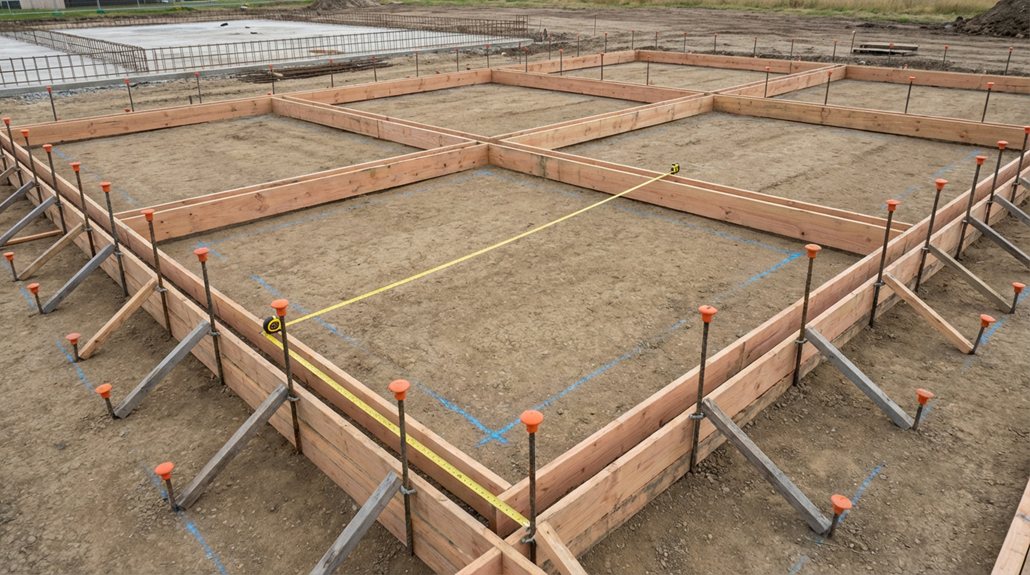
Proper formwork—the temporary wooden or metal framework that holds concrete in place while it cures—directly determines whether your driveway will be level, structurally sound, and built to the correct dimensions, so getting this step right prevents costly mistakes down the road.

You’ll use your formwork layout to establish precise edges and slopes that promote drainage. Install sturdy stakes every three to four feet, ensuring they’re driven deep into soil for stability. Concrete reinforcement like rebar needs proper positioning within this framework.

Check everything with a level before pouring; misaligned forms mean expensive removal and replacement later.

Pouring, Finishing, and Curing Techniques

Once you’ve got your formwork set and your rebar positioned correctly, it’s time to pour the concrete—and this is where careful execution makes the difference between a driveway that lasts decades and one that cracks, settles, or becomes uneven within a few years.

You’ll spread the mix evenly, using concrete finishing techniques like screeding and troweling to create a smooth, level surface. Next, implement proper concrete curing procedures: keep it moist for seven days minimum, which prevents premature drying and strengthens the material vastly, ensuring your investment withstands traffic and weather damage effectively.

Quality Inspection and Maintenance Guidelines

inspect monitor seal address

How can you guarantee your newly installed driveway preserves its strength and appearance for years to come? Start by inspecting cracks regularly—small hairline fractures become expensive repairs if ignored.

Monitor settlement, which occurs when the ground shifts beneath your concrete, causing uneven surfaces and potential damage. Schedule inspections every six months, checking for water pooling, which degrades the subbase.

Apply sealant every two to three years, creating a protective barrier against UV rays and chemicals. Address spalling (surface flaking) immediately to prevent deeper deterioration. These preventative measures cost considerably less than replacing a compromised driveway.

Frequently Asked Questions

How Much Does a Professional Concrete Driveway Installation Typically Cost?

You’ll typically spend $3,000 to $10,000, though factors influencing cost—like size, location, and whether you’re replacing existing concrete—can make your wallet cry harder. Average cost range? Prepare yourself accordingly.

What Is the Ideal Weather Condition for Pouring Concrete Driveways?

You’ll want that ideal temperature range between 50-85°F—Mother Nature’s sweet spot. Skip rainy days; precipitation considerations mean you’re basically pouring money down the drain if it rains before the concrete sets. Patience pays off!

How Long Should Homeowners Wait Before Driving on Newly Installed Concrete?

You’ll want to wait seven days before driving on your new driveway—that’s your ideal curing duration. Yeah, I know it’s torture, but concrete strength development needs time. Your impatience won’t speed physics up, friend.

What Permits or Licenses Are Required for Professional Driveway Installation?

You’ll need building permits and must check your local zoning regulations—basically, don’t be that neighbor who installs a concrete driveway and suddenly discovers you’ve violated three obscure codes. Your contractor should handle this bureaucratic fun.

Can Existing Asphalt Driveways Be Replaced With Concrete Without Removal?

You can skip the demo work! Concrete overlay options let you pour right over your asphalt. Just consider driveway resurfacing considerations—proper prep prevents your new concrete from cracking and becoming your most expensive regret.

Expert Final Thoughts

You’ve now got the roadmap to install a professional concrete driveway that’ll last for decades. By following each step—from evaluating your site to maintaining your finished surface—you’re preventing costly problems like cracking, settling, and premature deterioration. Your investment in proper planning, quality materials, and careful execution pays dividends through durability and curb appeal. You’re building something that works.

Mistakes to Avoid When Designing a Durable Driveway

Gravel, asphalt, or concrete—but are you making the five critical mistakes that will crack your driveway?

A durable driveway depends on five critical design foundations. First, proper drainage prevents water pooling and foundation weakening through freeze-thaw cycles. Second, compacted soil and quality gravel layers provide essential support and stabilization. Third, selecting climate-appropriate materials—asphalt for mild regions, concrete for moderate climates, gravel for stable areas—prevents costly replacements. Fourth, adequate thickness, typically four to six inches, handles vehicle weight and thermal stress. Fifth, correct slope and grade guarantee water flows away from structures. Each element directly impacts longevity and prevents expensive repairs within years.

Expert Highlights

  • Neglect proper drainage design, as water pooling weakens foundations and causes freeze-thaw damage.
  • Skip base preparation shortcuts; inadequate soil compaction and poor gravel layers cause premature failure.
  • Choose driveway materials suited to your climate to prevent cracking, spalling, and shifting.
  • Ensure sufficient thickness, typically four to six inches, for adequate load-bearing capacity and durability.
  • Ignore slope and grade at your peril; improper grading causes drainage problems and pooling.

Neglecting Proper Drainage Design

water damage structural problems

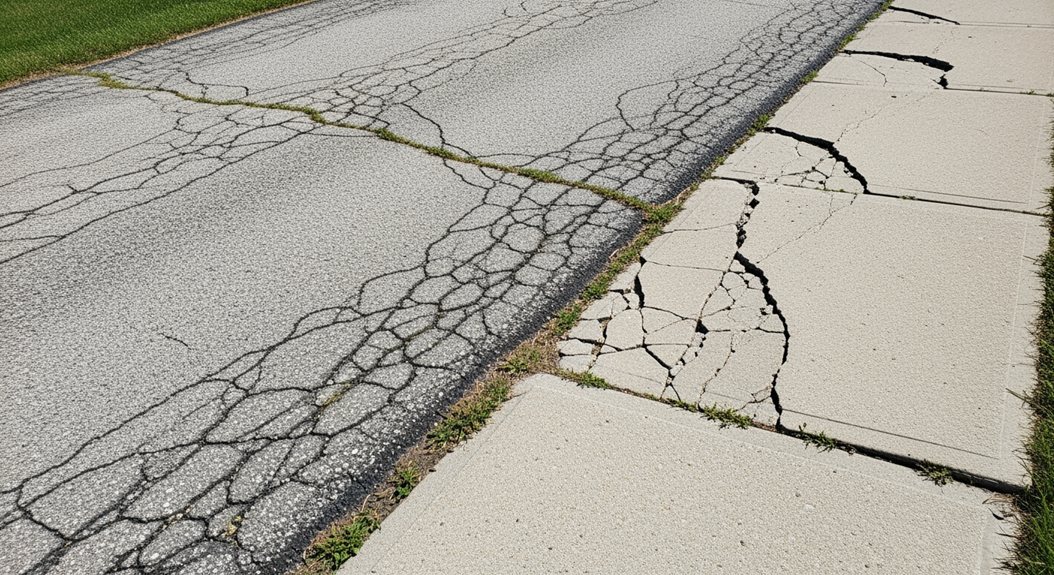
When water pools on a driveway instead of flowing away from it, the consequences extend far beyond surface-level inconvenience—improper drainage creates a cascade of structural problems that can reduce a driveway’s lifespan from decades to mere years. Water infiltration weakens the foundation layers beneath asphalt or concrete, causing cracks, potholes, and accelerated deterioration. Standing water also freezes in winter, expanding and fracturing surfaces through repeated freeze-thaw cycles.

Proper drainage requires sloping the driveway at least two percent away from structures and installing edge drains or French drains to redirect water. Permeable pavements and gravel shoulders offer additional solutions. These measures protect your investment by preventing water damage, extending durability considerably, and reducing costly repairs that community members know all too well.

2. Skipping or Rushing Base Preparation

durable driveway foundation preparation essential

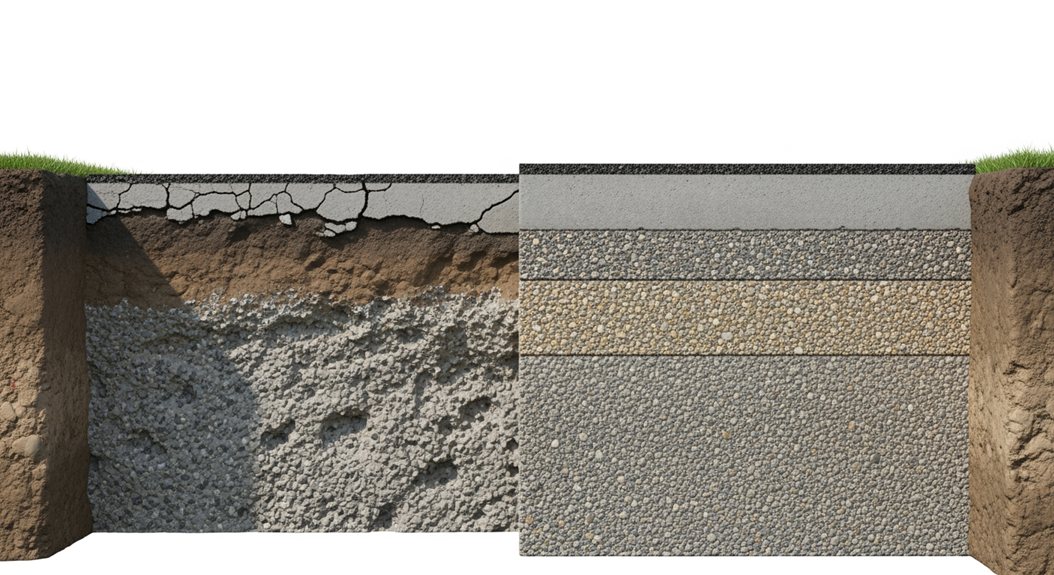
A durable driveway foundation requires two critical elements that many homeowners overlook: properly compacted soil and a quality gravel layer, both of which work together to prevent the settling, cracking, and pothole formation that plague hastily constructed driveways. When soil isn’t compacted adequately using specialized equipment, it continues to shift and settle beneath the pavement surface, causing uneven surfaces and structural failure within just a few years. The gravel layer—typically four to six inches of crushed stone—distributes weight evenly, improves drainage, and stabilizes the soil base, making this step absolutely essential rather than optional when building a driveway designed to withstand decades of vehicle traffic and harsh weather conditions.

Compacting Soil Properly

Because the foundation of any durable driveway depends entirely on what lies beneath the surface, properly compacting soil represents one of the most critical yet frequently overlooked steps in driveway construction. Inadequate compaction allows soil to settle unevenly, creating depressions and cracks that compromise the entire structure. When soil remains loose or partially settled, water infiltrates deeper layers, causing deterioration from beneath.

The solution requires using mechanical compactors—specialized equipment that systematically presses soil into dense, stable layers. Professionals typically compact soil in four-to-six-inch increments, achieving ninety-five percent compaction density. This methodical approach prevents future settling and extends driveway lifespan substantially.

Properly compacted soil creates a rock-solid foundation that distributes vehicle weight evenly, resists water damage, and maintains surface integrity for decades.

Gravel Layer Importance

Many homeowners and contractors underestimate the critical role that a properly installed gravel layer plays in driveway longevity, yet this component directly determines whether a driveway will remain intact for decades or deteriorate within years. Without adequate gravel foundation, water penetrates the soil beneath asphalt or concrete, causing erosion and structural failure.

Layer Function Depth Required Material Type Installation Method Expected Lifespan
Drainage 4-6 inches Crushed stone Compacted in layers 15+ years
Support 6-8 inches Angular gravel Heavy equipment 20+ years
Stabilization 2-4 inches Limestone dust Manual spreading 25+ years
Reinforcement 3-5 inches Recycled asphalt Roller compaction 30+ years
Base prevention 1-3 inches Fine gravel Settling time 20+ years

Properly constructed gravel layers distribute vehicle weight evenly, preventing potholes and cracks that compromise driveways prematurely.

3. Choosing the Wrong Material for Your Climate

climate appropriate material selection

When homeowners select driveway materials without considering their local climate, they often face costly repairs and premature deterioration within just a few years. Asphalt cracks in freeze-thaw cycles, concrete spalls in harsh winters, and gravel shifts excessively in hot climates. The solution requires matching materials to regional conditions. Northern climates benefit from permeable asphalt that flexes during temperature fluctuations, while southern regions suit concrete’s heat resistance. Homeowners should research their area’s weather patterns, consulting local contractors about proven material choices. This alignment prevents expensive replacements and extends driveway life considerably. By investing time in climate-appropriate selection upfront, property owners protect their investment and join communities of satisfied homeowners who enjoy reliable driveways for decades.

4. Underestimating Required Thickness

A driveway that appears thick enough during installation may crack and crumble prematurely if it doesn’t meet load-bearing capacity requirements, which depend on the types of vehicles it will support and how frequently they’ll travel across it. Climate conditions further complicate thickness calculations since freeze-thaw cycles in cold regions cause water to expand beneath the surface, requiring additional depth to prevent heaving and damage, while hot, arid climates may demand different thickness standards to combat UV degradation and thermal stress. Builders and homeowners must consult local engineering standards and climate data to determine the proper depth—typically ranging from 4 to 6 inches for standard residential use—ensuring the driveway withstands both the weight pressing down from above and the environmental pressures working against it from beneath.

Load-Bearing Capacity Requirements

One of the most common and costly mistakes homeowners make involves installing a driveway without calculating the actual weight it needs to support, which leads to premature cracking, rutting, and complete failure within just a few years. Load-bearing capacity refers to how much weight a driveway can safely handle over time.

Homeowners who neglect this calculation often face expensive repairs when regular vehicles cause surface deterioration. The solution requires determining vehicle weight, traffic frequency, and climate conditions before construction begins. A typical passenger car weighs 3,000 to 4,000 pounds, while SUVs exceed 5,000 pounds. Professional engineers assess these factors to recommend appropriate base materials and thickness specifications.

Proper load calculations prevent structural failure, extend driveway lifespan considerably, and ultimately save homeowners thousands in replacement costs.

Climate Impact on Thickness

Many homeowners drastically underestimate how much thickness their driveway needs by ignoring the climate where they live, a critical oversight that leads to accelerated deterioration and costly repairs within just a few years. Cold climates demand thicker driveways because freeze-thaw cycles—when water enters pavement cracks, freezes, and expands—cause substantial damage. Hot, arid regions require different thickness considerations due to intense UV exposure and thermal stress. Standard recommendations typically suggest four inches for moderate climates, yet northern areas need six to eight inches of asphalt or concrete to withstand seasonal stress. Professional assessment guarantees your driveway matches regional demands, preventing premature cracking, potholes, and structural failure that compromise safety and aesthetics while protecting your investment long-term.

5. Ignoring Slope and Grade Considerations

Proper slope and grade—the angle and elevation changes of a driveway’s surface—represent foundational design elements that homeowners and contractors frequently overlook, yet their absence creates serious, costly problems. Without adequate slope, water pools on the surface, causing cracks, potholes, and accelerated deterioration. A driveway needs at least a 1-2% grade, meaning it should drop one to two inches per every fifty feet of length.

Solutions involve calculating proper drainage angles during initial planning and directing water toward storm drains or landscaping. Professional grading guarantees longevity, preventing expensive repairs later. By addressing slope considerations upfront, property owners join those who build driveways lasting fifteen to twenty years rather than facing premature replacement costs and safety hazards from standing water and ice formation during winter months.

6. Failing to Account for Expansion and Contraction

While proper grading prevents water damage from pooling, another silent threat undermines driveways from within: the constant expansion and contraction caused by temperature fluctuations. Asphalt and concrete naturally expand when heated and shrink when cooled, creating internal stress that eventually cracks the surface. Homeowners who ignore this reality face premature deterioration, with small fissures widening into major breaks within years. The solution involves installing proper expansion joints—deliberate gaps spaced every 10-12 feet that allow materials to move freely without cracking. Using flexible sealants in these joints further protects against moisture infiltration. By accommodating seasonal movement from the start, driveway owners extend their investment’s lifespan considerably, avoiding costly repairs and maintaining a structurally sound surface that truly lasts.

7. Cutting Corners on Edging and Borders

The edges and borders of a driveway might seem like minor details, but they play a pivotal role in structural integrity and longevity. Neglecting proper edging allows water infiltration, soil erosion, and base material displacement—problems that compromise the entire surface.

Without adequate borders, asphalt and concrete shift unpredictably, creating cracks that spread rapidly. Base layers crumble, and vegetation encroaches, destabilizing edges further.

Issue Consequence
Missing edging Water seeps beneath surface, causing deterioration
Poor border installation Soil migration weakens foundation support
Inadequate restraint Pavement edges crumble and fracture

Investing in quality edging materials—aluminum, steel, or concrete curbs—contains movement and redirects water away effectively. Proper installation prevents costly repairs by protecting vulnerable perimeter zones, ensuring your driveway withstands weather cycles and traffic stress reliably for decades.

8. Overlooking Subgrade Conditions and Soil Issues

Many driveway failures originate not from the surface itself, but from what lies beneath—the subgrade, which is the soil and foundation layer supporting the entire structure. Ignoring soil conditions leads to serious problems that compromise durability and create expensive repairs.

Weak subgrades cause cracking, settling, and uneven surfaces that deteriorate quickly. Proper assessment prevents these costly failures:

  • Soil testing identifies clay content, drainage capacity, and bearing strength before construction begins
  • Compaction obligations guarantee the foundation supports weight without shifting or settling over time
  • Drainage solutions prevent water accumulation, which weakens soil and accelerates deterioration

Professionals who invest time understanding local soil conditions build driveways that last decades. This foundational step transforms surface materials into truly durable investments, protecting against premature failure and unexpected replacement costs.

9. Delaying Regular Maintenance and Sealing

Once a driveway is installed, the work doesn’t end—it actually intensifies, because neglecting regular maintenance and sealing accelerates deterioration far beyond what weather alone would cause. Without protective sealant, water infiltrates cracks and weakens the base layer, causing potholes and structural failure. Similarly, ignoring debris removal allows moisture to pool, fostering cracks that expand during freeze-thaw cycles.

The solution involves establishing a maintenance schedule: seal driveways every two to three years and clear debris regularly. Promptly filling small cracks prevents them from widening into expensive repairs. These preventive measures extend driveway lifespan by five to ten years while maintaining a polished appearance that reflects pride in homeownership. Investing minimal time and resources today prevents costly resurfacing or replacement tomorrow, protecting both property value and neighborhood standing.

Frequently Asked Questions

What Is the Average Cost Difference Between Asphalt and Concrete Driveways?

Concrete driveways typically cost 50-100% more upfront than asphalt, ranging from $8-18 per square foot versus $3-7 for asphalt. However, concrete’s longevity often justifies the premium investment for homeowners seeking lasting quality.

How Often Should I Have My Driveway Professionally Inspected for Damage?

Professional driveway inspections should occur annually, allowing homeowners to join the community of those who maintain their properties responsibly. Seasonal assessments catch emerging issues early, ensuring long-term durability and protecting one’s investment alongside fellow conscientious property owners.

Can I Repair a Driveway Myself, or Do I Need Professionals?

Homeowners can tackle minor repairs like filling small cracks themselves, joining the community of DIY enthusiasts. However, professionals should handle significant damage, extensive resurfacing, or structural issues to guarantee lasting quality and proper techniques.

What Is the Typical Lifespan of a Well-Maintained Asphalt Driveway?

A well-maintained asphalt driveway typically lasts 15 to 20 years. Regular seal coating every two to three years, prompt pothole repairs, and proper drainage considerably extend its lifespan, allowing homeowners to protect their investment effectively.

Are Permeable Pavement Options Better for Environmental Sustainability?

Permeable pavement options offer genuine environmental advantages by reducing stormwater runoff, filtering pollutants, and recharging groundwater. These sustainable alternatives align with modern community values while protecting local ecosystems and infrastructure.

Expert Final Thoughts

Building a durable driveway requires attention to nine critical elements, from drainage systems to regular maintenance schedules. Homeowners who address these mistakes—proper base preparation, appropriate material selection, adequate thickness, correct slope, and expansion joints—safeguard their investment for decades. Ignoring these fundamentals leads to costly repairs, premature cracking, and surface deterioration. By implementing these solutions systematically, property owners guarantee their driveways withstand weather, traffic, and time effectively.

Important Questions To Ask When Signing A Multifunction Printer And Copier Repair Service Contract

Find essential contract safeguards for your copier repair service before unexpected downtime cripples your business operations.

When signing a multifunction printer service contract, businesses should scrutinize response times, uptime guarantees, and maintenance cost structures. Critical questions include whether consumables are included in fixed fees, what exclusions apply to coverage, how technician qualifications are verified, and what escalation procedures exist for unresolved issues. Contract renewal terms, termination procedures, and security update provisions deserve careful examination to avoid unexpected costs and extended downtime. These considerations form the foundation for a service agreement that truly protects operational efficiency.

Expert Highlights

  • What are the guaranteed response times for emergency vs. routine service calls, and how is uptime calculated?
  • Are consumables like toner and drums included in the monthly fee, or will they incur additional charges?
  • What specific service exclusions exist, and how might they affect coverage for common issues?
  • What certifications and experience levels do the technicians who will service your equipment possess?
  • What are the auto-renewal terms, termination procedures, and reporting mechanisms included in the contract?

What Are The Response Times And Service Level Agreements?

response times and slas

When negotiating a printer repair contract, response times and service level agreements (SLAs) form the critical foundation that determines how quickly and effectively service providers will address equipment failures. These agreements should explicitly define what constitutes an emergency versus routine maintenance, with guaranteed timeframes for technician arrival and issue resolution.

Organizations should guarantee contracts specify whether response times are measured in business or clock hours, as this distinction dramatically affects actual downtime. A four-hour response within business hours could mean next-day service if a problem occurs late afternoon. Additionally, contracts should outline escalation procedures when initial responses fail to resolve issues, detailing compensation for SLA violations. Request historical performance data from providers to verify their ability to meet promised benchmarks. Without clearly defined SLAs, businesses risk extended downtime that disrupts operations and productivity.

How Are Maintenance Costs And Consumables Handled?

maintenance costs and consumables

Understanding how maintenance costs and consumables are handled constitutes one of the most financially significant aspects of any printer repair contract. Contracts vary widely in their approach to toner, drums, fusers, and other replaceable components. Some agreements include all consumables in a fixed monthly fee, while others charge per page or maintain separate billing for parts versus labor.

Organizations should carefully examine whether preventative maintenance visits are included or billed separately, and whether there are hidden fees for weekend service calls or after-hours support. The contract should clearly define which parts are considered consumables versus standard components covered under the maintenance agreement. Smart procurement officers request a thorough list of all potential charges before signing and negotiate caps on annual price increases for both service and supplies to avoid unexpected budget surprises.

What Coverage Limitations Or Exclusions Exist?

coverage exclusions and limitations

Precisely where the protection of a Multifunction printer repair contract ends often hides in the fine print that many organizations fail to scrutinize. Common exclusions include damage from power surges, unauthorized modifications, improper use, or environmental factors like dust and humidity. Most contracts exclude third-party components and may void coverage if non-OEM parts or consumables are used.

Organizations should carefully review sections detailing “acts of God,” relocation damage, and operator error definitions. Some providers exclude coverage during non-business hours or impose surcharges for weekend service. Software-related issues might fall outside hardware maintenance agreements, creating unexpected costs when troubleshooting complex problems.

Before signing, request a thorough list of exclusions and negotiate removal of unreasonable limitations. Understanding these boundaries prevents surprise expenses and guarantees the contract truly meets operational needs rather than leaving critical vulnerabilities exposed.

Is There A Guaranteed Uptime Percentage?

Most Multifunction printer repair contracts should clearly specify a guaranteed uptime percentage, often ranging from 95% to 99.9%, which establishes the minimum operational availability expected from your printing equipment. These service level agreements typically detail how uptime is calculated, including which hours count toward the measurement period and what constitutes “downtime” for reporting purposes. When uptime guarantees aren’t met, the contract should outline specific compensation mechanisms, such as service credits, extended coverage periods, or financial rebates, alongside response time commitments that define how quickly technicians will address various types of printer failures.

Service Level Calculations

How reliable will your printer service be when you need it most? Service level calculations determine the exact metrics used to measure uptime guarantees, providing clarity on what constitutes acceptable performance. Understanding these calculations helps organizations hold service providers accountable and guarantee business continuity.

When reviewing service level calculations in printer repair contracts, examine:

  1. The specific formula used to calculate uptime (total available hours minus downtime, divided by total available hours)
  2. Which hours count toward “available time” (business hours only or 24/7)
  3. How response time factors into downtime calculations (whether clock starts at issue reporting or technician arrival)

Clear service level calculations prevent disputes by establishing objective measurements for service quality. Organizations should negotiate for calculations that reflect their operational needs, guaranteeing vendors can’t manipulate metrics through technical loopholes that mask actual performance issues.

Downtime Compensation Details

While service level calculations establish how performance is measured, the true test of a provider’s commitment lies in what happens when those metrics aren’t met. Contracts should specify compensation for excessive downtime, typically structured as service credits, extended coverage periods, or direct financial reimbursement. Organizations should negotiate for guaranteed uptime percentages—ideally 98% or higher for mission-critical equipment—with clearly defined compensation thresholds when these targets aren’t achieved.

Effective contracts outline progressive compensation scales that increase as downtime accumulates. For example, a 4-hour repair delay might trigger a 10% monthly credit, while a 24-hour delay could warrant 50%. These provisions should apply automatically without requiring claims submissions. Additionally, agreements should address replacement equipment availability during extended repair periods, ensuring business continuity when primary devices fail.

Response Time Commitments

Response time commitments form the backbone of any printer repair contract, yet many organizations fail to secure specific guarantees that protect their operational needs. When downtime threatens productivity, knowing exactly when technicians will arrive becomes essential. Companies should carefully evaluate the response time framework before signing any agreement.

  1. Verify tiered response commitments – Ascertain the contract specifies different response times based on severity (e.g., 2 hours for complete failure vs. 8 hours for minor issues).
  2. Confirm geographic coverage – Response guarantees may vary by location; remote offices often receive slower service unless explicitly negotiated.
  3. Examine penalty clauses – Effective contracts include financial penalties when response times aren’t met, typically through service credits or reduced monthly fees.

Negotiating these elements creates accountability and guarantees the service provider prioritizes your organization’s equipment when problems arise.

How Are Technician Qualifications And Training Verified?

Verifying the qualifications and training of printer repair technicians stands as a critical component when evaluating service contracts. Companies should request documentation of manufacturer-specific certifications, industry credentials, and ongoing technical education programs that technicians complete annually. Without properly trained personnel, organizations risk extended equipment downtime, improper repairs that compound issues, and security vulnerabilities when handling devices that store sensitive data.

Contract negotiations should include explicit language regarding technician requirements, including minimum experience levels (typically 3-5 years), verification processes, and the right to request alternative technicians if qualifications are insufficient. Progressive service providers maintain transparent online portals where clients can review assigned technicians’ credentials before service visits. This verification system guarantees that only properly qualified professionals handle sophisticated multifunction devices, ultimately protecting the substantial investment these machines represent.

What Escalation Procedures Exist For Persistent Issues?

Establishing formal escalation procedures represents a natural extension of technician qualifications, as even the most skilled professionals occasionally encounter persistent printer issues that defy standard resolution methods. Organizations should clearly understand how service providers handle problems that remain unresolved after initial troubleshooting attempts. This critical component of any repair contract guarantees accountability and provides a pathway to resolution when standard processes fail.

Escalation procedures ensure accountability when standard resolution methods fail, creating a clear pathway to resolve even the most persistent printer issues.

  1. Management Escalation Tiers – Confirm specific timeframes for when issues escalate from technicians to supervisors and ultimately to executive management
  2. Replacement Provisions – Verify when persistent problems trigger equipment replacement rather than continued repair attempts
  3. Performance Guarantees – Identify what service level penalties or credits apply when resolution timelines exceed contractual agreements

Without defined escalation procedures, organizations risk lengthy downtime with no clear recourse for resolution, potentially impacting critical business operations.

How Does Contract Renewal And Termination Work?

While printer repair contracts provide essential maintenance coverage, organizations must thoroughly understand the renewal and termination clauses to avoid unexpected service disruptions or financial penalties. Contract terms typically include auto-renewal provisions, early termination fees, and notice period requirements that can greatly impact operational continuity and budgeting.

Contract Element Risk Solution
Auto-Renewal Unwanted continuation Calendar reminders 60-90 days before expiration
Early Termination Substantial fees (30-100% of remaining value) Negotiate shorter initial terms or graduated fee structure
Notice Requirements Accidental renewal if missed Document delivery confirmation and follow-up verification

Companies should calendar renewal dates, understand notice requirements, and negotiate termination conditions before signing. Request termination procedures in writing and verify what equipment return protocols exist to guarantee a smooth transition if changing providers.

Are Software Updates And Security Patches Included?

Modern printers rely on firmware that requires regular updates to maintain security and functionality, making it essential to confirm the frequency of software updates included in your service contract. Cybersecurity vulnerabilities in networked printers can provide hackers with entry points to your entire network, so all-encompassing contracts should specify protection against these risks through timely security patches. Additionally, inquire whether the contract permits remote maintenance access, which enables technicians to troubleshoot and install updates without an on-site visit, potentially reducing downtime and service response times.

Update Frequency Guarantees

How frequently will your printer’s firmware and software be updated throughout the contract period? This critical question determines whether your equipment will maintain peak performance and security over time. Without a clear update schedule, organizations risk operating with outdated software that leaves vulnerabilities exposed and misses performance improvements.

When negotiating update frequency guarantees, insist on:

  1. Specific timeframes for routine updates (monthly, quarterly) with clear documentation of what each update addresses
  2. Explicit procedures for emergency security patches, including maximum response times (24-48 hours) for critical vulnerabilities
  3. Verification processes that confirm successful installation and proper functionality after each update

Companies should request a documented update history for their specific printer model to evaluate the vendor’s track record of timely maintenance. This historical data provides insight into how diligently the provider has supported their equipment.

Cybersecurity Vulnerability Protection

Why do so many organizations overlook the critical cybersecurity aspects of their printer repair contracts? Modern multifunction printers are sophisticated network devices that store sensitive data and can serve as entry points for cyberattacks. When vulnerabilities are discovered, timely software updates and security patches become essential protective measures.

Before signing any repair contract, organizations should confirm whether security updates are included without additional charges. Key questions to ask include: How quickly are critical security patches deployed after vulnerabilities are identified? Is there a formal process for vulnerability management? Does the provider conduct regular firmware updates? Will they notify you of zero-day vulnerabilities? Companies should also verify if the service includes security configuration management and whether technicians follow proper security protocols when servicing devices, preventing unauthorized access to stored information during maintenance.

Remote Maintenance Access

The remote maintenance capabilities of modern printer fleets represent a double-edged sword for organizations, offering both convenience and potential security risks that must be carefully managed through thorough repair contracts. When vendors can access internal systems to update firmware, diagnose problems, or reset equipment, organizations must guarantee proper safeguards exist to protect sensitive data and network integrity.

  1. Access Control Protocols – Determine what authentication methods the provider uses for remote access, including multi-factor authentication requirements and whether maintenance sessions are logged and monitored.
  2. Security Update Frequency – Confirm how often the vendor will deploy critical security patches and whether these updates are included in the base contract price.
  3. Remote Access Limitations – Specify whether the vendor can access devices only upon request or maintains persistent connections, and establish clear boundaries for data collection during maintenance sessions.

What Reporting And Documentation Will You Receive?

When selecting a printer repair contract, businesses should carefully examine what reporting and documentation the service provider will deliver throughout the agreement term. Extensive reporting provides essential visibility into device performance, service history, and maintenance costs.

Quality contracts should include detailed service reports after each maintenance visit, documenting problems identified, parts replaced, and recommendations for future service. Monthly or quarterly usage reports showing print volumes, consumable utilization, and machine uptime percentages help organizations track efficiency. Additionally, contracts should specify access to an online portal where historical service data, warranty information, and maintenance schedules can be accessed on demand.

Without proper documentation, businesses may struggle to verify SLA compliance, anticipate replacement needs, or identify recurring issues that indicate deeper problems requiring resolution. Always confirm what reports will be provided, their frequency, and delivery format before signing.

Frequently Asked Questions

Do You Provide Loaner Equipment if Repairs Take Extended Time?

Service providers should offer loaner equipment for extended repairs. This provision maintains workflow continuity and should be explicitly detailed in the contract, including delivery timeframes and compatibility specifications.

Is Operator Training Included in the Service Contract?

Operator training inclusion varies by service provider. Clients should verify if basic or extensive training is included, frequency of sessions, and whether future staff training incurs additional costs.

How Are After-Hours Emergency Service Calls Handled?

Inquire about after-hours emergency protocols, including additional fees, response time guarantees, remote troubleshooting options, on-call technician availability, and prioritization systems for critical equipment malfunctions.

What Is Your Average Response Time for Rural Locations?

Response times for rural locations typically range from 4-8 hours, depending on distance, road conditions, and technician availability. Service providers should specify exact timeframes in their contract terms.

Are There Discounts for Signing Multi-Year Service Agreements?

Many service providers offer graduated discount tiers for multi-year commitments, typically ranging from 5-15%. Customers should inquire about escalation clauses that might affect these rates in subsequent years.

New MFD Printer in Houston, TX: A Detailed Breakdown

How to Acquire Your New MFD Printer in Houston, TX: A Detailed Breakdown

Getting a Multi-Function Device (MFD) printer in Houston, TX, involves understanding various leasing options, service providers, and feature sets. Whether you run a small business, corporate office, school, or hospital, securing the right printer lease tailored to your needs is vital for seamless operations. Here’s a comprehensive look at what you should consider

REASONS TO REPLACE YOUR COPIER

Leasing Options: Tailored for Your Business

Contract Duration, Monthly Costs, and Terms

Leasing an MFD printer gives businesses the flexibility to access the latest technology without a significant upfront expense. Lease durations typically range from 36 to 60 months, with monthly costs varying based on the chosen model and features. Longer lease periods might offer lower monthly payments, but it’s crucial to evaluate your long-term needs before committing to a lease.

Early Termination Fees

Understanding early termination fees is crucial when entering a leasing contract. Most agreements include penalties for ending the lease early. Being aware of these fees in advance can prevent unexpected costs if your business needs change.

Service Providers: Choosing Wisely

Local Vendors, National Chains, and Authorized Resellers

Selecting the right service provider is essential for a positive leasing experience. Local vendors often offer personalized service and quicker response times, which is advantageous in a city as large as Houston. National chains, on the other hand, might provide more comprehensive packages and competitive pricing due to their scale. Authorized resellers offer a balanced option, combining personalized service with competitive pricing.

Printer Features: What to Prioritize

Multi-functionality, Print Speed, and Paper Capacity

Leasing an MFD printer involves more than just acquiring a printing device. These machines typically include scanning, copying, and faxing capabilities, making them an all-in-one solution for your office. Consider the printer’s speed—ranging from 20 to over 100 pages per minute—depending on your volume needs. Also, decide between color or black-and-white printing, as color printers generally come at a higher cost. Paper capacity is another critical feature, especially for businesses that handle large print jobs regularly.

Customer Support: Ensuring Smooth Operations

Maintenance and Technical Assistance

Reliable customer support is key when leasing an MFD printer. Many leasing agreements include maintenance services to keep your printer in top condition throughout the lease. Technical assistance is equally important—ensure your provider offers timely support, particularly during critical business hours. In Houston’s fast-paced business environment, printer downtime can be costly.

Target Markets: Industry-Specific Solutions

Small Businesses, Corporate Offices, Schools, and Hospitals

Different industries have unique printing needs. Small businesses might seek cost-effective solutions with basic features, while corporate offices may require high-speed printers with extensive multifunctionality. Schools and hospitals, which often handle high print volumes, might need robust machines with large paper capacities. By understanding your industry’s specific needs, you can choose a leasing option that perfectly aligns with your requirements.

Location: Serving Houston and Nearby Areas

Houston’s large geography means business needs can vary widely depending on location. Whether you’re located in the bustling downtown area or the surrounding suburbs, it’s important to select a service provider capable of meeting your specific needs, including prompt support and delivery services.

Contract Types: Finding the Right Fit

Full-Service Lease, Equipment-Only Lease, and Managed Print Services

There are several contract types available for leasing MFD printers:

  • Full-Service Lease: This comprehensive option covers both the equipment and all required maintenance and support services, ideal for businesses that prefer an all-inclusive solution.
  • Equipment-Only Lease: In this setup, you lease the printer itself, with maintenance and support services contracted separately. This can be a cost-effective choice for businesses with in-house IT support or those that prefer to manage their own maintenance.
  • Managed Print Services: This option goes beyond equipment leasing. Managed Print Services (MPS) include a thorough evaluation of your printing needs, followed by ongoing management of your printing environment to enhance efficiency and cut costs.

Office Equipment Supplier in Houston, TX

Acquiring an MFD printer lease in Houston, TX, is a crucial decision with long-lasting effects on your business. By thoroughly evaluating leasing options, choosing a trusted service provider, and selecting features that meet your needs, you can ensure your investment delivers maximum value. Whether you’re running a small business, corporate office, school, or hospital, partnering with a reliable office equipment supplier will support your operations and contribute to your business’s success.

Printer Leasing and Rentals

Printer Leasing and Rentals

When shopping for a printer leasing plan, you need flexibility that seamlessly adapts to your business’s dynamic needs. Opt for variable rental times, including short-term and month-to-month options, to guarantee you’re not locked into an inflexible agreement. This approach not only provides lower monthly payments but also allows you to upgrade or change printers easily. By choosing the right lease structure, you can better manage your office technology while keeping costs under control. Whether you need cutting-edge innovations or stable operations, a carefully selected lease option can greatly enhance your business’s productivity, and further exploration can reveal even more tailored solutions for your unique growth.

Printer Leasing and Rentals

Variable Rental Times

“Flexibility is key when it comes to managing your printing needs. That’s why variable rental times can be a lifesaver, allowing you to adjust your lease durations based on outside factors like seasonal fluctuations. As you navigate the world of printer leasing, rest assured that you can find options tailored to your unique requirements.”

Adjustable Rental Terms

Adjustable Rental Terms in Printer Leasing: Customizing to Your Needs

Adjustable rental terms in printer leasing allow you to tailor your commitment to suit your specific needs, whether you require short or long-term arrangements. This flexibility empowers you to adapt your lease negotiation based on the flux in your business demand.

For instance, you may need additional printers for a short-term project or want to test out a machine before committing to a long-term lease. Adjustable rental terms guarantee that you don’t end up paying for more than you need. This variable rental strategy can considerably trim your expenses, particularly during slower periods when your printing volumes drop.

In many cases, leasing agreements offer month-to-month options or seasonal adjustments, further catering to the fluctuations in your printing needs. Additionally, you may have the option to terminate your lease early or extend it if your business requirements change. This adaptability guarantees that your printing equipment aligns seamlessly with your evolving business goals, resulting in enhanced productivity and cost savings.

Leasing Period Flexibility

Beyond the month-to-month freedom offered by some leasing agreements, businesses can benefit from a wide range of leasing periods, typically spanning from 12 months to several years, allowing for careful tailoring to suit specific operational requirements and budget constraints. This flexibility in leasing periods gives you significant control over how you choose to utilize printers for your business.

If you need a printer for a seasonal project, you can opt for a shorter lease term. This guarantees that you only pay for what you need, reducing unnecessary expenses when demand is low. On the other hand, if you anticipate sustained use over an extended period, you can negotiate a longer lease with lower monthly payments. This adaptability allows you to align your printer availability with your operational demands. Effective lease negotiations are vital to guarantee that your lease terms align seamlessly with your business needs, so it is essential to carefully consider your leasing strategy and leverage this flexibility accordingly. By doing so, you can optimize your printer usage, ensure cost-effectiveness, and ultimately enhance the overall efficiency of your operations.

Custom Rental Durations

By leveraging custom rental durations, businesses can strategically tailor their printer leases to accommodate fluctuating operational demands, ensuring that their printing solutions align with their evolving business strategies. This flexibility can be essential for companies that experience seasonal or project-based printing needs. With variable rental times, you can optimize your printer utilization without being locked into inflexible contracts.

These leasing options offer customization that suits different business needs. By choosing a lease that aligns with your printing demands, you can manage costs, optimize equipment usage, and stay nimble in response to changing operational requirements.

Lower Monthly Payments

When you consider leasing a printer, you’ll appreciate how it markedly reduces your monthly payments compared to purchasing. By doing so, you can reallocate funds to other operational needs, ensuring your business runs more efficiently. Lower monthly payments through leasing make it easier to manage your cash flow effectively, which is especially important for small businesses.

Printing Cost Breakdown

Breaking down the costs of leasing a printer reveals that dividing the total expense over time can greatly reduce your monthly payments. This means that rather than spending a large sum all at once when buying a printer, you can budget for smaller, more manageable monthly lease payments. By doing so, you can effectively control your printing budget and maintain a better cost analysis. The four main components of a typical printer lease include:

  • Monthly lease payments for the printer itself,
  • Maintenance and repair services,
  • Supply costs, such as toner and ink,
  • Any additional fees for excess print usage.

In addition to the financial benefits, leasing a printer also guarantees access to professional support and maintenance, reducing any potential downtime for your operations. With a lease, you can update your printer technology as needed without significant upfront costs, which makes it easier to adapt to changing business demands and maintain an efficient printing setup.

Underlying Lease Structure

Underlying Lease Structure: Lower Monthly Payments

Leasing printers often results in lower monthly payments compared to purchasing outright, as lessees only pay for the usage of the equipment rather than the full purchase price upfront. This financial structure allows you to budget more effectively and free up capital for other essential investments.

Here are some key benefits to contemplate:

  • Flexible Leases: With lease terms ranging from 24 to 60 months, you can choose a duration that aligns with your operational needs and financial capabilities.
  • Predictable Expenses: Many leasing agreements are structured to include maintenance and service costs, making it easier to budget with predictable monthly expenses.
  • Freeing Up Capital: Lower monthly payments can enable you to allocate funds toward growth opportunities rather than equipment purchase.
  • End-of-Lease Options: At the end of the lease term, you often have the option to purchase the printer at a predetermined price, adding to the financial benefits of leasing.

These features of lease agreements can help manage the financial impact of obtaining a printer, allowing you to make more strategic financial decisions and align with your business goals.

Hidden Charge Concerns

“This is the output for the topic ‘Hidden Charge Concerns’ under ‘Printer Leasing’.”

Benefits

When you choose printer leasing, you can enjoy access to lower monthly payments and cost-effective devices without sacrificing advanced features. This allows you to benefit from easier upgrades when technological advancements become available. You can also take advantage of renewal flexibility options at the end of your lease, ensuring your business adapts quickly to changing needs.

Cost-Effective Devices

Leasing printers is particularly cost-effective as you can enjoy access to cutting-edge technology without tying up significant capital, allowing you to manage your budget more efficiently. This approach frees up resources that would be better spent on other business needs, ensuring you stay competitively positioned. While purchasing printers can be too expensive for many businesses, especially for advanced or specialized devices, leasing offers affordable options that fit your budget allocation.

  • No Huge Upfront Costs: Leasing typically requires minimal initial investment, reducing the strain on your finances.
  • Predictable Monthly Payments: Fixed lease payments make it easy to manage your cash flow and budget.
  • Access to the Latest Technology: Stay updated with the most advanced printers as you can easily upgrade or replace devices at lease renewal.
  • Reduced Maintenance Burden: Leasing often includes maintenance services, shifting unexpected expenses away from your business.

Easier Upgrades Available

You can easily avoid stagnating technology as leasing agreements typically include seamless upgrade options to the latest models, ensuring you stay ahead of the curve without draining your coffers. This flexibility allows you to leverage cutting-edge innovations quickly, enhancing your business’s competitiveness.

Leasing lets you focus on what matters most: running and growing your business. By keeping your printing equipment up-to-date, you can capitalize on the upgrade advantages. This means never getting stuck with outdated technology that hampers your productivity.

Moreover, leasing gives you direct access to advanced features without breaking the bank. With the latest technology at your fingertips, you’ll be able to take advantage of better performance and efficiency. Plus, you won’t have to worry about the financial strain from purchasing new machines outright. You can upgrade as frequently as needed, ensuring that your business stays agile, responsive, and future-proof.

Renewal Flexibility Options

Printer leasing agreements often come packed with a wealth of renewal flexibility options, ensuring that lessees can tailor their printing solutions to the ebb and flow of their unique business needs. This adaptability is essential in managing your printing costs and operations effectively.

  • Flexibility in Lease Extensions: Renewal flexibility allows you to extend your lease terms without the need for a new contract, which can be highly beneficial to businesses that face fluctuating printing demands.
  • Predictable Monthly Payments: With renewal flexibility, you can enjoy predictable monthly payments, making it easier to budget and scale your printing capabilities as needed.
  • Modifications During the Lease Term: Many leasing contracts provide the option to modify equipment during the lease term, allowing you to adjust to increased workloads or new projects without incurring additional expenses.
  • Maintenance Costs Avoided: By opting for a lease with renewal flexibility, you can avoid the significant costs associated with equipment depreciation that come with owning the equipment outright.

Call to action

Now that you fully understand the benefits of leasing a printer or copier, it’s time to take the next step and find the perfect leasing solution for your business. With various options available, it’s essential to choose a leasing provider that aligns with your needs and guarantees seamless integration into your operations.

| Leasing Option | Benefits | Duration |
| Short-term Lease | Flexibility & Upgrade Options | 6-24 months |
| Medium-term Lease | Sound Financial Planning & Tax Benefits | 2-5 years |
| Long-term Lease | Cost-effective Monthly Payments & Extensive Support | 5-7 years |

Whether you need a short-term lease to accommodate rapid growth or a long-term lease for stability, there’s a solution tailored to your business. Take control of your office technology and start enjoying the advantages of leasing. You deserve to focus on driving success, not worrying about printer downtime or obsolete equipment. Don’t wait – find your tailored leasing solution today and watch your business thrive.

Frequently Asked Questions

Do You Sell or Lease Copiers?

‘You might want to contemplate leasing a copier for predictable monthly payments and lower upfront costs. Our leasing options offer various benefits, like included maintenance and flexibility to upgrade.’

How Do I Get a Copier Proposal or Quote?

To get a copier proposal or quote, share your detailed requirements with vendors, including copier specifications and desired lease agreements. This guarantees you get tailored quotes that meet your specific needs and budget.

How Long Should I Have to Wait for Service?

For service calls, expect a response time of 4-24 hours, but guaranteed times can be as short as two hours for emergencies, and regular maintenance schedules can help reduce downtime and improve response times.

What if My Copier Can’t Be Fixed?

If your copier can’t be fixed, review your service agreement to see what options you have for a replacement unit. Your leasing company might provide a temporary one during repairs or require the malfunctioning machine back before delivering a new one.

Do Copier Lease Companies Replace Ink Cartridges?

Yes, many copier lease companies do replace ink cartridges, often including them in their maintenance agreements, offering lower overall costs and hassle-free supplies with flexible ink cartridge options.

Ensure Safety and Warmth: Chimney Sweep Services in Minnesota

Chimney Sweep Services in Minnesota

As the temperatures drop and the snow begins to fall, there’s nothing quite like the warmth and ambiance of a fireplace in Minnesota. However, to keep your fireplace safe and efficient, regular chimney maintenance is crucial. Chimney sweep services ensure that your chimney is free from dangerous creosote buildup, blockages, and structural issues. In this blog, we’ll explore the importance of chimney sweep services in Minnesota, what to expect during a chimney cleaning, and how to choose the right professional for the job.

chimney-restoration

Why Chimney Sweep Services Are Essential

Safety First

A dirty chimney can be a significant fire hazard. Creosote, a byproduct of burning wood, can accumulate on the walls of your chimney. This substance is highly flammable, and if not removed regularly, it can ignite and cause a dangerous chimney fire. Regular chimney sweep services help prevent these hazardous buildups, ensuring your home stays safe.

Improved Efficiency

A clean chimney allows your fireplace to function more efficiently. Blockages or buildup can restrict airflow, causing your fireplace to burn less efficiently and produce more smoke. By keeping your chimney clean, you can enjoy a more efficient burn, which translates to better heat output and lower energy costs.

Prevent Carbon Monoxide Poisoning

Blockages in your chimney, such as nests or debris, can prevent smoke and harmful gases from properly venting out of your home. This can lead to carbon monoxide buildup inside your house, which is a severe health hazard. Regular chimney inspections and cleanings ensure that your chimney is clear and that your home is safe from carbon monoxide risks.

What to Expect During a Chimney Sweep Service

When you schedule a chimney sweep service, here’s what you can typically expect:

  1. Inspection
    • A professional chimney sweep will begin with a thorough inspection of your chimney. This includes checking for creosote buildup, blockages, and any structural damage.
  2. Cleaning
    • Using specialized tools, the chimney sweep will clean the inside of your chimney. This process involves removing creosote, soot, and any debris that may have accumulated.
  3. Documentation
    • After the cleaning, you’ll receive a detailed report of the inspection findings and any recommendations for repairs or further maintenance.
  4. Repairs (if needed)
    • If the inspection reveals any issues, such as cracks or damaged masonry, the chimney sweep may provide repair services or refer you to a specialist.

Choosing the Right Chimney Sweep in Minnesota

Selecting the right professional for your chimney maintenance is crucial. Here are some tips to help you choose:

  • Certification: Ensure the chimney sweep is certified by the Chimney Safety Institute of America (CSIA). This certification indicates that the technician has received proper training and adheres to industry standards.
  • Experience: Look for a company with a proven track record and years of experience in the field.
  • Reviews and References: Check online reviews and ask for references to ensure the company has a good reputation for quality work and customer service.
  • Insurance: Verify that the company carries proper insurance to protect your home and their workers.
  • Detailed Estimates: Choose a provider who offers clear, detailed estimates and explains the scope of work.

Common Questions About Chimney Sweeping

How often should I have my chimney swept?

The National Fire Protection Association (NFPA) recommends having your chimney inspected and cleaned at least once a year.

Can I clean my chimney myself?

While some homeowners attempt DIY chimney cleaning, it’s best to hire a professional. They have the tools, knowledge, and experience to ensure a thorough and safe cleaning.

What are the signs that my chimney needs cleaning?

Signs include excessive smoke when using the fireplace, a strong odor from the chimney, and visible soot or creosote buildup.

What is creosote, and why is it dangerous?

Creosote is a byproduct of burning wood. It’s highly flammable and can cause dangerous chimney fires if not removed regularly.

Are chimney sweep services expensive?

Costs vary depending on the condition and size of your chimney, but investing in regular maintenance can save you money by preventing costly repairs and ensuring efficient operation.

Chimney Sweep Services

Regular chimney sweep services are vital for maintaining a safe, efficient, and cozy fireplace, especially during the harsh winters in Minnesota. By investing in professional chimney maintenance, you can prevent fire hazards, improve heating efficiency, and ensure your home is safe from harmful gases. Don’t wait until it’s too late—schedule a chimney inspection and cleaning today to enjoy peace of mind and a warm, inviting home all winter long

Professional Deck Building

Professional Deck Building

The Advantages of Hiring a Residential Deck Contractor

When it comes to transforming your backyard into an outdoor oasis, working with experienced “deck builders” or “affordable deck builders near me” is the way to go. These professionals possess the knowledge and skills to design and construct a beautiful, functional outdoor living space tailored to your unique needs and preferences.

Expertise in Deck Design

One of the key advantages of hiring a professional deck contractor is their expertise in deck design services. They can guide you through the vast array of options, from “composite deck contractors near me” to “Trex deck builders near me,” ensuring you select the perfect materials for your project.

Bringing Your Custom Deck Vision to Life

“Custom deck construction” is all about creating an outdoor living space that reflects your personal style and seamlessly integrates with your home’s aesthetics. Professional deck builders work closely with you to understand your goals and develop a design that harmonizes with your existing landscape.

Attention to Detail, from Material to Installation

From “deck material selection” to “deck installation techniques,” your contractor will meticulously consider every aspect of your project, ensuring it is executed to the highest standards. They can incorporate features like “outdoor entertainment areas,” “deck safety features,” and “landscape integration” to craft a cohesive and inviting outdoor space.

deck build

Expanding Your Outdoor Living Possibilities

Beyond traditional decks, professional builders can help you explore a variety of outdoor living options. “Patio and deck combination” designs offer the best of both worlds, while “multi-level deck designs” create distinct spaces for different activities.

Outdoor Entertaining Enhancements

If you love to entertain, consider incorporating an “outdoor kitchen integration” or built-in seating areas. “Deck lighting and accessories” can add ambiance and extend the usability of your space into the evening hours.

Ensuring Quality, Safety, and Sustainability

When working with a professional deck contractor, you can rest assured that your project will be completed to the highest standards of quality and safety. They adhere to “building code compliance” regulations and can recommend “sustainable decking options” that are both eco-friendly and durable.

Ongoing Maintenance and Repair Guidance

Your contractor will also provide guidance on “deck maintenance and repair” to help you keep your outdoor living space in top condition for years to come.

The Professional Deck Building Process

The deck building journey begins with a “client consultation,” where your contractor will listen to your ideas and help you refine your vision. They will then develop a detailed design plan and provide you with a comprehensive project timeline and cost estimate.

Project Management and Customization

Throughout the construction process, your contractor will provide “project management” services to ensure every aspect of your deck is completed on time and within budget. They will also work with you to incorporate “aesthetic customization options” and “weather-resistant materials” to create a beautiful and long-lasting outdoor living space.

Accessibility and Inclusion

Professional deck builders can also incorporate “accessibility features” like ramps and railings to ensure your outdoor living space is welcoming and usable for everyone. They can create designs that are both beautiful and functional, allowing all to enjoy your new deck.

Elevate Your Outdoor Living Experience Today

Ready to take the first step towards your dream outdoor living space? Contact a professional deck building service today to schedule your consultation and start bringing your vision to life. With their expertise and dedication to quality, you’ll soon be enjoying a beautiful and functional deck that enhances your home and your lifestyle.

A Future By and For All People: Jobs Advancing Democratic Ideals

You’re part of a bigger picture – a future where everyone’s voice matters. Workplace democracy isn’t just a buzzword; it’s the key to an inclusive, balanced society. In this piece, you’ll explore the role of democratic ideals in employment, learn about organizations championing these values, and see how you can contribute to this transformative vision. You’re not just part of the workforce; you’re part of the change. Let’s dive into a future built by and for all people.

Understanding Democratic Ideals in Employment

To fully grasp how democratic ideals play out in employment, you’ve got to break down the core principles of democracy and how they translate into a work environment. Democracy is fundamentally about equality, freedom, and participation. These principles, when applied to employment, create workplaces where everyone’s voice is heard, ideas are freely expressed, and decisions are made collaboratively.

Imagine working in a place where you’re not just a cog in the machine, but an equal stakeholder whose opinion matters. You’re free to propose innovative ideas, and you have a say in decisions that affect your work life. That’s the essence of democratic employment. It’s a place where power is decentralized, and leadership is participatory, not authoritarian.

However, it’s not enough to merely have democratic ideals. They need to be actively fostered. A workplace culture that promotes open communication, transparency, and mutual respect is essential. You’ve also got to ensure fair treatment and equal opportunities for all employees, regardless of their race, gender, age, or background.

In essence, democratic ideals in employment facilitate a sense of belonging; they create an environment where you’re not just working for a paycheck, but you’re part of a collective endeavor, pursuing common goals, and sharing in the fruits of your labor. And isn’t that the kind of workplace you’d want to be part of?

Understanding democratic ideals in employment is the first step towards creating workplaces that are not only productive but also inclusive, fair, and empowering. It’s about shifting from a culture of command and control to one of collaboration and co-creation.

The Role of Equal Opportunity

In striving for a democratic workplace, you can’t overlook the crucial role of equal opportunity. It’s a cornerstone of fairness and justice, ensuring everyone gets a fair go, regardless of their race, religion, gender, age, or disability. It’s not just about ticking a box; it’s about creating a workplace culture that truly values diversity and inclusion.

Equal opportunity offers a multitude of benefits. It promotes diversity, bringing a range of perspectives, experiences and ideas into the workplace. This diversity can fuel innovation, drive better decision-making and enhance problem-solving capabilities. It can also lead to greater employee satisfaction and engagement, as people feel valued and respected for who they are.

However, equal opportunity isn’t just handed to us; it requires commitment and action. Policies must be put in place, but they’re only the beginning. They need to be brought to life through ongoing education, transparent communication, and accountability. It’s about creating a culture where everyone feels they belong and can contribute to their full potential.

You must also be mindful of the potential pitfalls. Unconscious bias and discrimination can still creep in, even with the best intentions. It requires continuous vigilance to ensure these don’t undermine your efforts.

In essence, equal opportunity is a vital aspect of a democratic workplace. It’s about ensuring everyone has a fair shot, fostering diversity and inclusion, and creating a culture where everyone feels they belong. It’s an ongoing journey, but one that’s well worth the effort.

Nurturing Diversity and Inclusion at Work

Cultivating a diverse and inclusive work environment, you’re not just ticking off a corporate responsibility box, you’re fostering innovation, productivity, and a sense of belonging among your team. You’re creating a space where different perspectives can breed creativity and problem-solving, where people from all walks of life can feel valued and heard. It’s about recognizing that diversity goes beyond just race or gender; it includes age, background, abilities, and experiences that shape individuals’ worldviews.

To effectively nurture diversity and inclusion at work, consider these key strategies:

  • Promote Open Dialogue: Encourage conversations about diversity and inclusion. Let your team share their experiences, listen, and learn from them. This ensures that everyone feels heard and understood.
  • Implement Inclusive Hiring Practices: Work towards eliminating bias in your hiring process. Seek candidates from a variety of sources and backgrounds, not just the usual channels.
  • Provide Diversity Training: Equip your team with the tools to understand and appreciate differences. This might involve bringing in experts or providing resources for self-learning.

Case Studies: Organizations Championing Democracy

While you’re fostering diversity and inclusion in your workspace, it’s also important to consider how some organizations are actively championing democratic ideals, as showcased in the following case studies. These organizations aren’t just talking the talk, they’re walking the walk, embodying values of inclusivity, belonging, and democracy in their everyday practices.

Organization How They Champion Democracy
Oxfam International This global organization promotes the voices of marginalized populations in international decision-making forums. They’re proponents of economic equality, social justice, and human rights.
FairVote FairVote advocates for electoral reforms in the U.S. to ensure every vote counts and every voice is heard, echoing the true spirit of a democratic society.
Open Society Foundations With a belief that societies can only flourish when their members have equal say, this foundation supports democratic governance around the world.

The case of Oxfam International shows that democracy can be championed through amplifying marginalized voices, advocating for economic equality, and promoting human rights. FairVote, on the other hand, champions the democratic ideal of equal representation, ensuring that every vote and every voice counts in the electoral process. Lastly, the Open Society Foundations demonstrates that supporting democratic governance worldwide is crucial for societies to flourish.

In your own organization, you’re encouraged to take inspiration from these case studies. Whether it’s through fostering inclusivity, encouraging diverse voices, or advocating for fair practices, there are numerous ways you can champion democratic ideals. Remember, a future by and for all people is not only possible but necessary. By striving for this, we’re creating a more equitable, inclusive, and democratic world.

The Impact of Democratic Workplaces on Society

Every democratic workplace you foster significantly contributes to the overall development and prosperity of society. As you build more democratic workplaces, you’re not just creating jobs, but you’re also cultivating an environment where each individual’s voice matters. This sense of inclusion and equality has far-reaching effects that extend beyond the confines of the office.

  • First, democratic workplaces reinforce the principle of equality. They offer everyone an equal chance to contribute, make decisions, and share in the rewards. This fosters a sense of belonging, making employees feel valued and respected.
  • Second, these workplaces cultivate a culture of open dialogue and collaboration. They encourage each member to express their opinions freely, fostering innovation and creativity, which are vital for societal progress.
  • Third, democratic workplaces contribute to a more equitable society. They promote fair wages, provide secure jobs, and ensure the wealth is distributed more evenly.

These facets of democratic workplaces don’t just benefit employees; they also benefit society as a whole. They provide a model for how our society could be—more equal, more collaborative, and more equitable. So, as you continue to foster democratic workplaces, remember that you’re not just enhancing your company, but you’re also contributing to the betterment of society. You’re part of a movement that values every individual’s voice and potential, that encourages collaboration and innovation, and that strives for a more equitable society. In essence, you’re helping to build a future by and for all people.

Future Trends in Democratic Employment

In the realm of democratic employment, you’ll notice several emerging trends that could shape your future workplace. As we march towards a more inclusive society, workplaces are mirroring these changes by adopting more democratic practices. You’re part of this shift, and you’ll see it in how decisions are made, how leadership is structured, and how your voice is valued.

Firstly, you’ll find an increasing emphasis on collective decision-making. Rather than top-down directives, you’ll be invited to contribute your ideas and opinions. It’s not just about making you feel included, it’s about tapping into a diverse range of perspectives to make the best possible decisions.

Secondly, the traditional hierarchical leadership structure is giving way to more flat structures. You won’t be working under a boss, but alongside team members. Leadership roles are becoming more rotational and based on expertise rather than tenure. It’s a trend that values your expertise and allows you to step into leadership when it’s your turn.

Lastly, employee voice is gaining traction. Your opinions, ideas, and concerns matter more than ever. You’re not just a cog in the machine, but a valuable contributor to your organization’s success. You’ll find more platforms emerging in your workplace to voice your thoughts and make a difference.

Practical Steps Towards Democratic Workplaces

So, what can you do to actively participate in these democratic trends at your workplace? The answer lies in fostering an inclusive environment, promoting open communication, and driving collaborative decision-making. These are not just lofty ideals but practical steps that can be implemented in any workplace setting.

  • Foster an Inclusive Environment: This is about more than just having a diverse team. It’s about making sure everyone feels like they belong, and that their opinions and ideas matter. This can be done through team-building activities, inclusive language and policies, and simply by showing empathy and respect to all members of the team.
  • Promote Open Communication: Transparency and honest communication are vital for democratic jobs. You can encourage this by creating safe spaces for feedback, implementing open-door policies, and practicing active listening. Remember, it’s not just about speaking your mind, it’s also about listening to others.
  • Drive Collaborative Decision-Making: This involves everyone having a say in the decisions that affect them. You can foster this by setting up regular team meetings, using collaborative tools and methods, and encouraging everyone to contribute their ideas and perspectives.